
Devotionals During the COVID-19 Crisis: Lesson 31 – From Pastor Joyce

Tuesday April 28, 2020

In my distress I prayed to the Lord,
    and the Lord answered me and set me free.
The Lord is for me, so I will have no fear.
    What can mere people do to me?
Yes, the Lord is for me; he will help me.
    I will look in triumph at those who hate me.
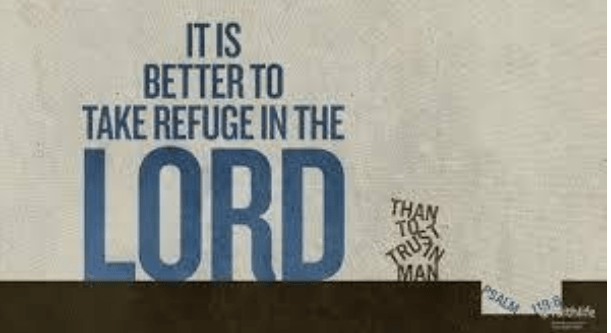
It is better to take refuge in the Lord
    than to trust in people.
It is better to take refuge in the Lord
    than to trust in princes.

Psalm 118:5-9 (NLT)

One of the feelings many of us are facing now is distress. We feel distress when we hear the latest figures for new coronavirus cases, the number who have needed to be hospitalized and those who have needed to be put on ventilators, and the huge loss of life. We feel distress when we hear the stories that the front line people, the doctors, nurses, EMTs, police, and the many others who go to work each day wondering how many they will care for who will die and whether they will contract this virus themselves, suffer symptoms, or possibly take the virus home to their families. We feel distress when we hear of the problems that are a part of our food chain distribution. We feel distress when our government officials cannot tell us when things will get back to normal – with children in school, parents back at work, restaurants opening, movies showing again in theaters, and we gathering again in church. There is a lot to feel distressed about. In addition, each of us may be feeling distressed because we cannot know if or when we will contract COVID-19 and if we do, how our bodies will respond. All of these things can fill us with anxiety and distress.

The psalmist felt distress and responded by praying to the Lord. The psalmist then tells us that the Lord answered his prayers and “set me free.” That is a key statement to make. This man was in anguish and his natural response was to turn to God in prayer. I think many of us do the same, especially in times like these. How often we turn to God in prayer when things are bleak, and we see no way out.

But then the psalmist makes an amazing statement – God answered his prayers. He knew that God answered his prayer because he felt set free. Set free from what? Distress? Pain? Fear? Anxiety? And likely undesirable feelings as well? That he was set free is plain – he knows that God is watching over him and, because of that knowledge, he has no fear. He knows that God is with him and will help him through the difficult times. But why is this man so sure that God is available to help him? The answer lies in trusting in God’s promises, relying on the faithfulness and unwavering love God shows to him and to us, and as a result experiencing the comfort and assurance that comes from knowing God in this intimate way.

The psalmist goes on to say that it is better to trust in God than to trust in people. Yet in this current situation, what we hear over and over again are recommendations and opinions of people, experts and those in authority. We also know that people are the ones who are saving lives in hospitals, stocking our shelves in grocery stores, driving our buses, planting our crops, and so many other things that make us feel that we as people can overcome even this pandemic. And that is good.


What we can trust in is that God is here among us, that God will not abandon us. God’s presence can be seen in the godly actions of people around us. God uses us all to show God’s love and care. But, and this is a big but, we as people cannot be relied upon to know all the answers. None of our leaders, political, medical, or social, know when and how this novel coronavirus will be completely overcome. Only God knows.

Only God can direct our people to find the answers that will allow us to go on with “normal” life once again. So, although we don’t know the answers, we can know that God does, and that God hears our prayers and sets us free from distress and sets us free from fear. We can trust that God knows what each day will bring. Day by day, day by day, we will make it through trusting in God. Our desire may be to know the future, but God gives us what we need for a day. Just as God gave the Israelites fleeing from Egypt manna to eat, the amount God gave was only for a day. Each new day brought sufficient food for that day. Each new day for us can bring respite from fear and distress. Day by day, until we finally can say the pandemic is over.

The focus scripture for today begins at verse 5 of Psalm 118. This psalm begins with a verse that is good for us to repeat: Give thanks to the Lord for he is good! His faithful love endures forever. Amen and amen.

-Pastor Joyce Donigian

Devotionals During the COVID-19 Crisis: Lesson 30 – From Pastor Doug

Monday April 27, 2020

I solemnly urge you in the presence of God and Christ Jesus, who will someday judge the living and the dead when he comes to set up his Kingdom: Preach the word of God. Be prepared, whether the time is favorable or not. Patiently correct, rebuke, and encourage your people with good teaching.
For a time is coming when people will no longer listen to sound and wholesome teaching. They will follow their own desires and will look for teachers who will tell them whatever their itching ears want to hear. They will reject the truth and chase after myths.
But you should keep a clear mind in every situation. Don’t be afraid of suffering for the Lord. Work at telling others the Good News, and fully carry out the ministry God has given you. As for me, my life has already been poured out as an offering to God. The time of my death is near. I have fought the good fight, I have finished the race, and I have remained faithful. And now the prize awaits me—the crown of righteousness, which the Lord, the righteous Judge, will give me on the day of his return. And the prize is not just for me but for all who eagerly look forward to his appearing.

2 Timothy 4:1-8


This letter to Timothy was specific. Paul was looking back on a long life. He was writing to someone who would shepherd a church. It would be a great letter from me to Jon. 

It has value for more than an old pastor encouraging a young pastor-to-be. It has value for all of us.


It begins with encouragement to fulfill our purpose. “1I solemnly urge you… Preach the word of God.” 

Imagine parents addressing their newly wed children. They would say, “Raise your children with love. Teach them humility without breaking their spirit. Give them enough protection to flourish but not so much as to restrict. Teach them about faith but let their faith be their own. Patiently correct, rebuke, and encourage your children …” In other words, fulfill your purpose as parents in the raising of your children.

Paul goes on to say to Timothy that it won’t be easy. “… people will no longer listen …”  Whatever you attempt to do, you will encounter opposition. How true that is. Imagine a letter to a young salesperson, from one about to retire. “Customers will shut their ears to your ‘pitch.’ You will be asked to sell items that you don’t believe are worth the price. Rival salespeople will take your customers. People will not pay their bills.”


The important thing, as you follow your purpose and run into roadblocks, according to Paul, is to keep doing what is right and not be frightened off. “ … keep a clear mind … Don’t be afraid …”  Survivors might say this to those beginning an ordeal. The ordeal could be an operation like a hip replacement or chemo to treat cancer or coughing and testing positive to covid-19. Or it could be something natural like going to school for the first time or having one’s first baby. Survivors might say, “Remember clearly that God loves you and don’t let fear take control.”


Verse 7 is so important. “ I have fought the good fight, I have finished the race, and I have remained faithful”. Notice that Paul says he has finished the race. He has taken up his purpose in life. He has had troubles. He kept at it and did not give in to doubt and fear. But … Sarah Lunsford in the Upper Room reminds us that Paul does not say he “won” the race. He just says he did not quit. He finished. 


Parents do not say all their children became model citizens. Only that they did what they could and continue to do what they can for their children. Salespeople do not say they broke every sales record. Only that they were people of their word and cared about their customers. Survivors do not say they never dissolved into tears and wailing. They only say they got through the tunnel and they are there for those just entering. 


What we hope to say, at whatever stage we are in, is that we have tried to remain faithful and we trust in God for the rest. As we hunker down during shelter-in-place, let us all be encouraged. God loves us. We are remaining faithful. We trust God for the rest.

Blessings – Pastor Doug 

Stay in touch. Share your needs. Let us help. Amen.

Devotionals During the COVID-19 Crisis: Lesson 29 – From Pastor Doug

Friday April 24, 2020

13 Now, who will want to harm you if you are eager to do good? 14 But even if you suffer for doing what is right, God will reward you for it. So, don’t worry or be afraid of their threats.
15 Instead, you must worship Christ as Lord of your life. And if someone asks about your hope as a believer, always be ready to explain it. 16 But do this in a gentle and respectful way. Keep your conscience clear. Then if people speak against you, they will be ashamed when they see what a
good life you live because you belong to Christ. 17 Remember, it is better to suffer for doing good, if that is what God wants, than to suffer for doing wrong!

1 Peter 3:13-17

In an age where many engage in hard-sell self-promotion, it is good to hear this message. 

“If someone asks about your hope as a believer…”  Why would someone ask us a question about our beliefs?  Unless I’m in a church setting, I rarely ask people this kind of question because so often people want to sell me something.  Before the quarantine, we were given tickets to the Philadelphia Flower Show. It was fun and interesting.  But I was careful to avoid eye contact with the vendors. Once eyes met, the sales pitch began. 

In a few cases we did allow eye contact. It was always because the display caught our attention. The display created a sense of admiration. Admiration led to the question, “How did they manage to do this cool thing?”  Or, “That looks really interesting!”  Or, “I wish I could do that.”

That’s why someone might ask another person about their hope.  They see how the person behaves and admire it. They wish they could behave that way. They want to know more.


Here is a counter example. Target has signs on its doors saying that face masks are mandatory for entry into the store. Wednesday, while I was there to pick up some items, two men came in without masks. Did anyone in the store think, “I admire their behavior. I want to get to know them better.”  Probably not. They were blatant. They were putting others at risk. They appeared to be trying to make some point. It was an in-your-face hard sell.  

“ … always be ready to explain it.  But do this in a gentle and respectful way.”  

A store employee wearing a mask soon confronted them and asked them to put on masks or leave. When he spoke to the maskless men, he was polite and gentle. He did not criticize them. He simply stated that store policy was to protect shoppers and asked them to please leave. If they put on masks, they were welcome to return. This employee was admirable.  He was a person one might ask, “How do you keep your cool?”  If he spoke of faith in a gentle and respectful way, he would be a witness in the way Peter described.


Times of stress like the present bring out opportunities to behave well when it matters. We can smile through our masks.  We can step aside to give someone space.  We can offer our place in line to someone older.  We have reason to fear but if we behave with loving care for others, people will, “see what a good life you live because you belong to Christ”. Amen.

-Pastor Doug Donigian

 Stay in touch.  Share your needs.  Let us help.  Amen.

Devotionals During the COVID-19 Crisis: Lesson 28 – From Jon Bauman

Thursday April 23, 2020

So Naaman came with his horses and chariots, and halted at the entrance of Elisha’s house. 10 Elisha sent a messenger to him, saying, “Go, wash in the Jordan seven times, and your flesh shall be restored and you shall be clean.” 11 But Naaman became angry and went away, saying, “I thought that for me he would surely come out, and stand and call on the name of the Lord his God, and would wave his hand over the spot, and cure the leprosy! 12 Are not Abana and Pharpar, the rivers of Damascus, better than all the waters of Israel? Could I not wash in them, and be clean?” He turned and went away in a rage. 

13 But his servants approached and said to him, “Father, if the prophet had commanded you to do something difficult, would you not have done it? How much more, when all he said to you was, ‘Wash, and be clean’?” 14 So he went down and immersed himself seven times in the Jordan, according to the word of the man of God; his flesh was restored like the flesh of a young boy, and he was clean.

2 Kings 5:9-14 (NRSV)

Naaman was considered a great man who was the commander of the King of Aram’s Army [Aram would have been located in modern day Syria] – The Lord even gave the King victory in battle because of Naaman (2 Kings 5:1). But Naaman developed leprosy, which was a physical and cultural death sentence because of its deteriorating effects on the body, and because of its contagion.

Naaman’s wife had a servant from the land of Israel, and the servant told his wife of a prophet in Israel who could heal him. Naaman was desperate to be healed, so he traveled with some of his men to this prophets house.

The text that we read today shows the prophet telling Naaman to do something so seemingly meaningless to address the severity of his disease that he thought it was a joke of some sort; that this prophet was really just a Crazy man.

Naaman’s servants wore him down to just trying it out, and he was healed. The story from 2 Kings 5 ends with Naaman proclaiming that surely there must be no other God than the God of Israel, for he had never experienced his previous gods power in that way.


The Bible is full of interesting stories such as this one where an outsider to Israel is spoken well of, and even aided by our God. In this instance, 2 Kings communicates that Naaman was helped by the Lord before he even met Elisha through his victory in battles, and then He was healed by a Hebrew prophet, and was then welcomed as a religious convert. Elisha even understood the fears of Naaman of going public about his faith in the God of Israel when he went back to serve his King who worshipped other Gods.

It is a story that speaks to the heart of what our faith was always intended to be – a light to the nations through the God who rescues.


Right now, the medical experts are telling all of us to stay home, to wear gloves, and to wear face-masks. A lot of us may have felt like Naaman at first – we may have seen these precautionary statements as either an over-simplification of addressing the problem, or perhaps we saw it as ridiculous when compared to the earlier advice we heard of “just wash your hands”.

But eventually, most of us have adopted these precautions either by choice, or because it has now been mandated. More people are taking steps to heal and protect our communities through working together, even if initially, we didn’t understand it.

We can view these masks as symbols of fear, or as symbols of light that speak to our mutual care and concern for one another.


The Church around the globe has responded to this crisis in many ways. Many Pastors, church staff, and church leadership are putting in more hours than normal, churches are getting more and more familiar with technology and social media outlets, and phone calls and cards are being made. The Global Church is working hard to provide hope to our world.

Individual churches are seeing more engagement with their online services than they had typically seen on a Sunday Morning before all of this happened. Simple videos or posts that are made throughout the week are getting more responses than previously seen as well.

And why? Because the Church is seeking to be a light in the darkness, the church is seeking to bring light, and the church is seeking to bring healing to all people, whether they were members of churches before, or not.

This time, I believe, will show us the value of what Christianity offers our world – a welcome and a hope that extends past those who were already Christians – just like how the Bible extended blessing, hope, and healing to Naaman who worshipped other gods.

The Christian Churches around the globe are highlighting the Gospel right now through their messages that our God understands suffering, through the messages of Hope that we can have amidst calamity, and through the met needs of people who are longing for the kind of hope, community, and meaningful connection that the Christian Church provides.


I don’t know when churches will begin to meet in their buildings again, but I believe that when we do, we will begin to see new faces as more people are reflecting on their need for healing, and on the call of God to bring light to the world.

Devotionals During the COVID-19 Crisis: Lesson 27 – From Pastor Joyce

Wednesday April 22, 2020

21 But Moses responded to the Lord, “There are 600,000 foot soldiers here with me, and yet you say, ‘I will give them meat for a whole month!’ 22 Even if we butchered all our flocks and herds, would that satisfy them? Even if we caught all the fish in the sea, would that be enough?”

23 Then the Lord said to Moses, “Has my arm lost its power? Now you will see whether or not my word comes true!”

24 So Moses went out and reported the Lord’s words to the people. He gathered the seventy elders and stationed them around the Tabernacle. 25 And the Lord came down in the cloud and spoke to Moses. Then he gave the seventy elders the same Spirit that was upon Moses. And when the Spirit rested upon them, they prophesied. But this never happened again.

26 Two men, Eldad and Medad, had stayed behind in the camp. They were listed among the elders, but they had not gone out to the Tabernacle. Yet the Spirit rested upon them as well, so they prophesied there in the camp. 27 A young man ran and reported to Moses, “Eldad and Medad are prophesying in the camp!”
28 Joshua son of Nun, who had been Moses’ assistant since his youth, protested, “Moses, my master, make them stop!”

29 But Moses replied, “Are you jealous for my sake? I wish that all the Lord’s people were prophets and that the Lord would put his Spirit upon them all!” 30 Then Moses returned to the camp with the elders of Israel.

Numbers 11:21-30 (NLT)

We are definitely swimming in unchartered waters; there has never been a pandemic like COVID-19 in recent history. During this unsettling time, we have heard many, many stories of people who went the extra mile or many, many extra miles to help others. They have put their own lives in jeopardy in order to help others. We have also heard stories of other folks who, instead of helping others, have thought only of themselves and calming their own fears. How else can we explain the empty shelves in stores, shelves that once held enough toilet paper and hand sanitizer for everyone to have some? It seems that this time of social distancing and sheltering in place has brought out both the good side and the not so good side in people.

It would be wonderful if I could say with certainty that all the folks who volunteered in so many ways to help others were all committed Christians. And conversely to be able to say with equal certainty that all the hoarders and price gougers were atheists. However, I know that neither is the case; faith in God, no matter how deep, does not guarantee that we will always do the right thing. And having shallow faith or no faith at all doesn’t guarantee that anyone will disappoint and fail to help others. People react to fear and uncertainty in many different ways.


However, we can feel that our belief in God’s love for us gives us a reason to do the right thing. In our scripture today we see that this is not always the case. Moses asked his seventy elders to come with him to the Tabernacle, and God came down among them and they were able to prophesy – something that had never happened in the past, nor would it happen again in the future. What an experience that must have been!

However, there were two elders who chose not to follow Moses’ direction. They didn’t go to the Tabernacle as requested, but – they received the same gift of prophecy. That didn’t seem to be right to Joshua – they didn’t do the right thing and yet they got the same gift.


Jesus’ disciples had a similar problem. In Mark 9:38-40 we read, “38 John said to Jesus, “Teacher, we saw someone using your name to cast out demons, but we told him to stop because he wasn’t in our group.” 39 “Don’t stop him!” Jesus said. “No one who performs a miracle in my name will soon be able to speak evil of me. 40 Anyone who is not against us is for us.”


The concept that is missing in both of these accounts is this fact: God is in control. God acts the ways that God wants. We can’t win God’s favor by doing the right things. We can’t earn our salvation. We can’t earn our way into heaven. Yet we seem to want to be able to influence God by the things we do. None of us wants to be considered self-righteous, thinking we are able to control God’s opinion of us. But that’s the description of someone who believes that salvation can be earned or maintained by their own good works. That logic says that we are righteous in the sight of God because we are obedient. In Jesus’ time, that was the belief of the Pharisees. That isn’t what Jesus asks of us.


It is equally misguided to think that what we do here on earth doesn’t matter because God is an all-forgiving God, and so we all will meet in heaven no matter how we behave. This has been called the “ticket to heaven syndrome.”

So why then should we obey God’s will for us? Because doing God’s will flows out of our love and gratitude toward God for what God has done for us through Christ. We are in a love affair with God. When we are in a loving relationship, we want to please the one we love. We obey because we want to, not because we think we can earn something. We give our faith, trust, and devotion to that One we love, the One who loves us more than we can imagine. We are saved by that faith alone, but the faith that saves us does not stop there. It will always be accompanied by good works.


So that explains why believers do good things. But what about those lukewarm Christians or non-believers who do equally good works? That’s where this scripture can teach us something. God can and does use anyone God chooses to accomplish God’s good work. That means God can use believers, but also God can use a person who happens to be in the right place at the right time.

Our faith can be expressed in our actions. God’s faith in God’s creation, whether believer or otherwise, can be expressed in God’s calling on anyone to do what needs to be done. So it truly does come down to this: It’s not about you, it’s not about me, it’s all about God. Thanks be to God!

-Pastor Joyce Donigian

Devotionals During the COVID-19 Crisis: Lesson 26 – From Pastor Joyce

Tuesday April 21, 2020

39 Then, accompanied by the disciples, Jesus left the upstairs room and went as usual to the Mount of Olives. 40 There he told them, “Pray that you will not give in to temptation.”

41 He walked away, about a stone’s throw, and knelt down and prayed, 42 “Father, if you are willing, please take this cup of suffering away from me. Yet I want your will to be done, not mine.” 43 Then an angel from heaven appeared and strengthened him.

Luke 22:39-43 (NLT)

You have probably heard the proverb:  Every cloud has a silver lining. Or the saying:  It’s an ill wind that blows no one any good. Both of these maxims suggest that even when things are really bad, there is something comforting or hopeful that may come even though it may not be immediately obvious. Few things are so bad that no one benefits from them.

Our stay-in-place, sheltering-at-home actions of the last several weeks certainly are close to the top of the list of things that are cloudy or windy in an exceptionally bad way. Our entire way of life has been turned upside down, our schedules are demolished to be replaced with uncertainty, our livelihoods have been threatened by loss of income. Many, many Americans have become ill and too many have died. We are not able to see an end to our isolation since we are entirely dependent on the behavior of a virus that is both new and novel. We know that things will eventually get back to “normal,” but right now we can’t know when this will happen or even what “normal” will look like. 


There is also the saying:  when life hands you lemons, make lemonade. Is there any way to make lemonade in this time of uncertainty and anxiety? One thing that can be a real positive is the time we have to be alone. We humans are hard-wired to desire companionship; we are social creatures. Yet there is something valuable in spending time alone, time spent in prayer, study, reflection, or just observing God’s hand in the world. 


Our scripture for today recalls just such a time for Jesus. He knew his time on earth was soon coming to an end. He knew, at least in part, that his death would be painful and difficult. Jesus and his disciples had just shared a Passover meal together. Jesus had just shared the first Lord’s Supper with his disciples. They had finished their meal and were on the way to the Mount of Olives. While they were walking, Jesus admonished his disciples to not give into temptation. Why did he make this statement to them at this particular time? He may have been feeling a form of temptation himself – “Take this cup of suffering away from me.” This was his prayer as he knelt alone and poured out his heart to God. But his prayer did not end there; instead, he continued: “I want your will to be done, not mine.”

Jesus needed to get away from the crowds, away from even his disciples, in order to prepare himself for what was to shortly occur. This was not the first time Jesus needed to be alone; the gospels recall several instances. For example, Luke 4:42 says: When day came, Jesus left and went to a secluded place; and the crowds were searching for Him and came to Him and tried to keep Him from going away from them.

 Luke 5:15-16 tells us: But the news about Him was spreading even farther, and large crowds were gathering to hear Him and to be healed of their sicknesses. But Jesus Himself would often slip away to the wilderness and pray. 

Again, in Luke 6:12 we read: It was at this time that He went off to the mountain to pray, and He spent the whole night in prayer to God.

Matthew 14:23 recounts:  After He had sent the crowds away, He went up on the mountain by Himself to pray; and when it was evening, He was there alone.  

Mark also contains reports of Jesus’ need to be alone: Mark 1:35: In the early morning, while it was still dark, Jesus got up, left the house, and went away to a secluded place, and was praying there.

Jesus also taught his disciples the need for seclusion and isolation. In Mark 6:30-32 we read: The apostles *gathered together with Jesus; and they reported to Him all that they had done and taught. And He said to them, “Come away by yourselves to a secluded place and rest a while.” (For there were many people coming and going, and they did not even have time to eat.) They went away in the boat to a secluded place by themselves.


The social distancing that we are required to do during this coronavirus pandemic is hard for all of us. Yet there may be a lesson to be learned for all of us. We are a society that always wants to be busy, doing something, going somewhere, accomplishing something. Our lives have been filled – just look at our pre-pandemic schedules, almost every day was filled with a myriad of tasks and responsibilities. We hardly had time to take a breath.

Now we have more time than we know what to do with. Boredom is on the rise; depression is as well. We do not know what to do with these hours spent apart from others, not doing the things we once did. One way to fill these days, at least in part, is to use that time to reflect on the wonderful things we do have in our lives. We have all the comforts of our homes. We live in the greatest country in the world. We have under normal circumstances great individual freedoms. But more importantly, we have a loving, involved, caring, faithful, wise, and wonderful God. 

This time of having less to occupy us may be a good time to reflect on all that we have to be thankful for. It may be a time to thank God for a time to slow down, take a breath, and talk to God. That was what got Jesus through some of his most difficult times. That may be just what we need right now. Pause. Breathe. Look around. Reflect. Pray. Give thanks.

-Pastor Joyce

Devotionals During the COVID-19 Crisis: Lesson 25 – From Pastor Doug

Monday April 20, 2020

Matthew 12:33-36 – “A tree is identified by its fruit. If a tree is good, its fruit will be good. If a tree is bad, its fruit will be bad. … For whatever is in your heart determines what you say. A good person produces good things from the treasury of a good heart, and an evil person produces evil things from the treasury of an evil heart. And I tell you this, you must give an account on judgment day for every idle word you speak.

Matthew 10: 26-27 – “But don’t be afraid of those who threaten you. For the time is coming when everything that is covered will be revealed, and all that is secret will be made known to all. What I tell you now in the darkness, shout abroad when daybreak comes. What I whisper in your ear, shout from the housetops for all to hear!


Our devotional scriptures today teach two things.

Matthew 12 says that we must be true on the inside before we can be fruitful putting it into practice.

Matthew 10 says that once the inside is true we must put it into practice.

This is the path we are all on. Being transformed on the inside and trying to let this show on the outside to others.

Please see the following video:

Blessings and health,
-Pastor Doug Donigian


Stay in touch. Share your needs. Let us help. Amen.

Devotionals During the COVID-19 Crisis: Lesson 24 – From Pastor Doug

And Abram said, “You have given me no children; so a servant in my household will be my heir.”

Then the word of the Lord came to him: “This man will not be your heir, but a son who is your own flesh and blood will be your heir.” He took him outside and said, “Look up at the sky and count the stars—if indeed you can count them.” Then he said to him, “So shall your offspring be.”  Abram believed the Lord, and he credited it to him as righteousness.

He also said to him, “I am the Lord, who brought you out of Ur of the Chaldeans to give you this land to take possession of it.”  But Abram said, “Sovereign Lord, how can I know that I will gain possession of it?”  So the Lord said to him, “Bring me a heifer, a goat and a ram, each three years old, along with a dove and a young pigeon.”  10 Abram brought all these to him, cut them in two and arranged the halves opposite each other; the birds, however, he did not cut in half. 11 Then birds of prey came down on the carcasses, but Abram drove them away.

12 As the sun was setting, Abram fell into a deep sleep, and a thick and dreadful darkness came over him. 13 Then the Lord said to him, “Know for certain that for four hundred years your descendants will be strangers in a country not their own and that they will be enslaved and mistreated there. 14 But I will punish the nation they serve as slaves, and afterward they will come out with great possessions. 15 You, however, will go to your ancestors in peace and be buried at a good old age.

Genesis 15:3-15

This scripture was written when success was measured by the size one’s family.  It was only three generations ago when this was true in Pennsylvania. Pastor Joyce’s Mom was one of five children and her Dad was one of nine.  When I interned at Phoebe Homes in Allentown, I got to know several residents who were one of twelve or more.

These Pennsylvanians had the advantage of fertile soil and good rainfall to grow large families.  Abram (Abraham) lived in arid scrubland better suited for sheep and goat herding than food crops. There was no law to protect families except to gather in clans.  Being robbed or killed by neighbors was a real possibility. So God’s promise of a large family growing through generations was against the odds. To make His point about how big a family He was promising, God asked Abram to look at the sky and count the stars (verse 5).  It was very hard to believe, but Abram did believe the Lord, nevertheless (verse 6).

Kurt Elward, a contributor to the Upper Room, has a very interesting comment.  Note the sequence. God makes promises (verses 4-8); then Abram carries out a sacrifice (verses 9-11); and then the sun sets (verse 12).

If the sun was setting hours after God asked Abram to count the stars, what was there to count when God asked Abram to look up?  It was daylight. There were no stars to count. 

Abram believed God even when he could not see what God was promising.  

Kurt Elward reminds us of what Jesus said later to “doubting” Thomas, “Blessed are those who do not see and yet believe.”

This is the kind of faith we need now.  We cannot see how long this pandemic is going to last.  We cannot see how long the economy will take to recover.  We cannot see when a vaccine will be available. We cannot see whether we will catch it.  Yet, without seeing, we have faith that God always will be with us. We have faith that we can face this together.  We have faith not to give up on prayer and joy.  

This is good because we are much needed.  People we know have the virus. Others are lonely and afraid.  We must pray for them. Our prayers for them and their families will “avail much” (James 5:16).  We must call those who are available. This is how we can show love. Amen.

Pastor Doug      

Stay in touch.  Share your needs.  Let us help. Amen.   

Devotionals During the COVID-19 Crisis: Lesson 23 – From Jon Bauman

Thursday April 16, 2020

23 And when he got into the boat, his disciples followed him. 24 A windstorm arose on the sea, so great that the boat was being swamped by the waves; but he was asleep. 25 And they went and woke him up, saying, “Lord, save us! We are perishing!” 26 And he said to them, “Why are you afraid, you of little faith?” Then he got up and rebuked the winds and the sea; and there was a dead calm. 27 They were amazed, saying, “What sort of man is this, that even the winds and the sea obey him?”

Matthew 8:23-27 (NRSV)

We have seen the movies and TV Shows about boats being stuck in the middle of the ocean during a storm, and have felt the tension of the scene as the crew attempts to keep the boat above water. But this scene from Matthew 8 is even more tense than those moments.


Do you remember the story of Jonah when he refused to go where God told him to go, he fell asleep on a boat going somewhere else, and a terrible storm hit? The men on the boat blamed him for the storm because it was a common belief that the gods controlled the seas and the weather, and that Jonah must have upset his God. The only way in which the storm would calm was if Jonah sacrificed himself for the good of the crew by throwing himself overboard. The story doesn’t end there for Jonah either. But the point is that the people saw the rough weather as an indication of the anger of their gods. And the Sea was a scary Abyss that had no bottom.


In this passage, Jesus is exhausted from all of the ministry that needed to be done on the mainland, and he instructed his disciples to get in a boat and to go to the other side of the sea of Galilee. The “other side” of the sea of Galilee was populated completely by Gentiles, whereas where they came from was primarily occupied by the Hebrew people. Therefore, this “other side” would have been seen as unclean, dangerous, unholy, and even evil.

Can you imagine the disciple’s apprehension before getting on that boat as they wondered why Jesus would take them to the other side? Now imagine their confusion, anger, and fear, as the winds and waves start to get wild, and their leader is asleep at the stern of the boat (as Mark 4 tells us) which gave direction to the boat.

They must have wondered, “are we being punished? Is this not who we thought? Is he not going to help us?”.

Jesus then wakes up, and REBUKES the winds and the sea. That is, he puts the winds and the sea into place by submitting them under his authority, and there was a “dead Calm”. That which was alive and thriving, scary and treacherous, is now dead.

“What sort of man is this, that even the winds and the sea obey him?”


In that one act, Jesus proved his authority over the sea, which was seen as a murky abyss, over the weather, which was seen as being controlled by the gods (showing his own divine authority), and over the situation by showing the disciples that they can have peace when they are with Him.

During this time of turmoil, as our world is being tossed in the winds of fear and on the waters of hopelessness, we can either resign ourselves to this fear and to this hopelessness, or we can seek a peace that comes from knowing that God is with us.

We do not know when this will all go away, and when things will begin to feel normal again, but we do know that God is with us when we are afraid, when we cry, and that we can have peace in knowing that.

In trusting in this, we continue to follow Jesus into the unknown, like the disciples followed Jesus onto that boat that was headed to the other side.

Devotionals During the COVID-19 Crisis: Lesson 22 – From Pastor Joyce

Wednesday April 15, 2020

I will say this: because these experiences I had were so tremendous, God was afraid I might be puffed up by them; so I was given a physical condition which has been a thorn in my flesh, a messenger from Satan to hurt and bother me and prick my pride. Three different times I begged God to make me well again.

Each time he said, “No. But I am with you; that is all you need. My power shows up best in weak people.” Now I am glad to boast about how weak I am; I am glad to be a living demonstration of Christ’s power, instead of showing off my own power and abilities. 10 Since I know it is all for Christ’s good, I am quite happy about “the thorn,” and about insults and hardships, persecutions and difficulties; for when I am weak, then I am strong—the less I have, the more I depend on him.

2 Corinthians 12:7-10 – The Living Bible (TLB)

Have you ever heard someone say, “That’s going to scar him for life!” It’s usually said for comic relief about something that was dramatic in a person’s life.  It is true enough, that as we go through life, many things do affect us. And when those things are harmful, they can leave scars.

Many of us have actual scars from surgeries.  I have a silver-colored scar running down each of my knees – that’s where the surgeon performed knee replacement surgery.  Others have scars from heart surgeries or kidney-replacement surgery or even skin cancer surgeries. Although scars are often seen as something bad, they are really good.  Scars are the result of successful interventions to help a person live a healthier life. They can remind us of the pain and suffering that was a part of the original problem – or they can remind us of the healing the surgical intervention brought.

We all carry scars that are not physical, instead they are scars of the heart, things that have hurt us in the past, things that may not have healed even after many years.  People can carry hurts from childhood, things like being bullied or ostracized from a social group. There are scars from adulthood, things like losing friendships or being passed over for a promotion.    None of these scars show on the outside, but they are no less real. And they may not be scars at all. Scars result from a healing process. They show that infection is gone, a condition has been remedied, and healing can begin.  But if something is still wounding, that something is not part of the healing process. When past hurts continue to hurt us, they cannot heal.  

I once heard a therapist relate that when a client finally can talk about a past hurt, even one that may have happened as a child, the person’s voice changes to sound like that person at the age when the hurt happened.  The therapist suggested that this showed that the person was not able to move past the hurt. If the hurt happened as a ten-year-old, the person sounded like a ten year old. The client could only move past their hurt after it was talked about, discussed and new insights drawn.  It could be said that once it was opened up, cleaned out, and disinfected, it no longer was a hurt but was on its way to becoming a scar.  


Paul had some sort of hurt, a thorn in the flesh.  Paul calls it a physical condition, but it could also be something internal that affected him physically. Paul doesn’t tell us whether this thorn in the flesh was physical, spiritual, or emotional.  There has been much discussion as to exactly what this “thorn” was. Some of the more popular theories of the thorn’s interpretation include temptation, a chronic eye problem, malaria, migraines, epilepsy, or a speech disability. Others have suggested that he could be referring to the Jews’ rejection of the gospel or other persecution.  The phrase “thorn in the flesh” continues to be used as a metaphor for “a source of continual annoyance or trouble.” Paul had no relief from this “thorn.”

Whatever it was, it kept him from being as effective as he felt he could without it.  Because Paul was doing God’s work, it seemed only natural for him to ask God to take this condition or situation away.  He didn’t ask just once, he asked three times.

But God did not answer Paul’s plea, and Paul wanted to know why this was the case.  Paul was not asking for something for himself; instead he was asking for something that would allow him to be more effective in spreading the gospel.  Why wasn’t God giving Paul what he asked for? Paul did get this answer – God’s power is most noticeable in weak people, people who nevertheless continue to rely on God.  Instead of feeling weak by relying his own strength, Paul felt strong because he relied on God’s power.

The exact nature of Paul’s thorn in the flesh is uncertain. There is probably a good reason that we don’t know. God likely wanted Paul’s difficulty to be described in general enough terms to apply to any difficulty we may face now. Whether the “thorn” we struggle with today is physical, emotional, or spiritual, we can know that God has a purpose and that His grace is all-sufficient.  There are two types of things that we deal with – things that we can change, sometimes with help from professionals or friends or through prayer, and things that we can’t change no matter what.  


We all have had or will experience chronic illnesses, aging, diminished abilities, and other ailments.  We all have had or will experience emotional hurts, things in our pasts that we cannot change. Some of these things we cannot change because they are part of the aging process.  These we will continue to live with – just a Paul learned to live with his “thorn in the flesh.” Other things that we may want changed are not in our ability to change. We cannot bring back a loved one.  We can’t go back and fix something hurtful that we did in the past. Some things just can’t be changed. Some things we just have to live with. Paul’s reaction to not having his prayer answered in the way that he wanted helps us all accept that not all of the things we pray for, no matter how good they might be, will be answered in the way we would like.

There have been millions, even hundreds of millions, of prayers prayed for an end to this coronavirus pandemic.  God so far has not answered those prayers. One of the lessons to be learned from this unusual time is that we humans don’t have all the answers.  In time, we pray that we humans will find a vaccine that will tame this virus. In time, our lives will get back to some kind of normalcy. But while we are in the midst of this pandemic, we can continue to pray to God for strength, strength that comes from our most powerful God.  For that we can give thanks every day. God is with us. That is all we need. Amen.

-Pastor Joyce Donigian