The Passionate Kingdom – Reflections for Holy Week (Part 3)

Betrayal is something that many can never get over.

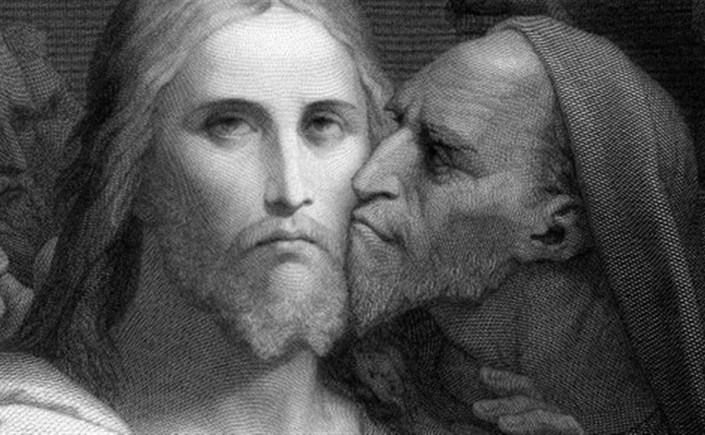
As Jesus prayed in the garden for his suffering to be over, his friend Judas was orchestrating for his suffering to increase.

After Christ was arrested, the same people who shouted Hosanna before, we’re now shouting “Crucify him!”.

gethes.jpg

His own disciples, when asked if they were a friend or follower of Jesus, denied their connection to him out of fear.

Jesus was alone in captivity, alone is his torment, and the only ones calling him a King now were Roman soldiers as they portrayed him as a lunatic with a ragtag sceptre, and a painful crown…


He carried his cross to the place where he would die. He watched as nails were driven into his hands.

87674682.jpgAs he was lifted up, not on a throne, but on an execution device for criminals, he saw soldiers gambling over his clothes…he heard the mocking of the crowds…he heard the taunts of one of the other criminals on one side, and the confessions of another on the his other side.

Some saw him as a King of the World…some saw him as the scum of the earth.

On that day, the Jesus that rules over the Passionate Kingdom, died.


Before he died, he proclaimed, “IT IS FINISHED!”.

His life, ministry, and death ALL meant something for this world – every Christian will agree to this.

But what did it do that made the world quantitatively different?

Why do we still experience evil, torment, betrayal, and blood-thirsty crowds?


Jesus knew our pain, our sorrow…our hopeless and endless longing for something to change.

He knew the hurt from betrayal.

But He became a King at a Table amongst friends and a King on a cross amongst enemies.

And he died for both audiences.


But what was finished?


In this time of reflection upon the death of Christ, our questions linger inside of a sealed off tomb.jesus-sealed-tomb.jpg


Subscribe for part 4 after Easter

The Passionate Kingdom – Reflections for Holy Week (Part 2)

king.jpg

Imagine if Jesus did not go to the cross, but instead overruled the Roman Empire in Judea in the 1st Century.

His rule would last for as long as his earthly body would live, but then the world would resume its chaos just as it had before.  Jesus would be replaced with a lesser king, and then a lesser king – until finally the people of God were left with filthy rulers who claimed a special connection with God.

Wait..doesn’t that sound familiar?  World history is FULL of leaders of nations who claimed to follow Christ and yet were famous for their bloodshed, odd practices, and injustice.

If Jesus had followed the desires of the people of Judea in the first century, nothing about his mission then would make a difference of substance now.

So what does this Passionate Kingdom of Jesus look like?


Freedom To Serve

The ways in which Jesus lets down and exceeds expectations is dramatic.  We know he wasn’t some military leader, but the “Last Supper” scene that is told each year on Maundy Thursday (The Thursday before Easter) is breathtakingly absurd.

The Gospel of Mark tells us that the Last Supper took place on the first day of the season of Passover; on the day in which a lamb was sacrificed for the meal. (Mark 14:12)

This is important because it means that Jesus and his followers, being observant Jews, were meeting together to observe the Passover meal together; a meal with many elements that represented different parts and themes of the Exodus story.

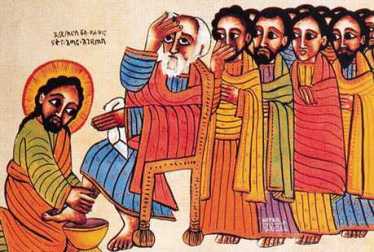
christ-washing-the-feet.jpgChrist began the meal with an act of service.  He washed the feet of his disciples (something usually done by those in lower classes, or servants).  He even washed the feet of Judas Iscariot – the one whom he knew would go off to betray him.

His disciples were taken aback by this odd act of service carried out by their leader – they even protested it! But still, Christ cleaned the feet of his disciples as a way of leading them by example to wash the feet of others – to be a servant to others.

Christ did this to show how the members of his Passionate Kingdom should act towards others in this world; to not remain still, or to just judge from afar, but to bend your knees before your fellow human being in need.

Christ was purposeful in his use of symbolism during this Passover meal with his disciples. When Christ says that the wine is his blood, the bread is his body – The symbolism was incredibly powerful.

The bread of Passover was meant to symbolize the Hebrew people’s time in slavery.

The four glasses of wine used at a Passover meal was used to symbolize God’s four expressions of deliverance in Exodus 6:6-7 – “I will bring out, I will Deliver, I will Redeem, I will Take you as my people” (Summary).

And so, here is a possible way of viewing Christ attributing the bread as his body, and the wine as his blood.

Capture-3.jpgWhen we break the bread, we are to remember that: His crushed body frees us from the slavery and bondage of our sin, the world, and the powers of evil.

When we drink the fruit of the vine, we are to remember that: His blood that was poured out redeems us from our past and marks us as the people of God.

Christ is the continuation and fulfillment of the Exodus account.

He was telling his disciples that He came to free us in a way that Moses couldn’t.  It wasn’t political freedom. It was freedom from the nastiest parts of ourselves, freedom from the most abhorrent wrongs committed by those in our world, and freedom from any true power that the powers of evil could have over us.

Instead of a Throne, A Table

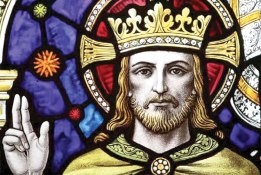
When Christ conveys the rich symbolism of the bread and wine in the Last Supper, he does so as a King who is sitting at a table with those who did not meet the standards of the religious leaders of his day.  He was sitting with a tax collector, some fishermen, and he even sat with someone who he knew would betray him.

At a time when the Roman Empire was expanding by force and oppression of the “different”, Christ’s Passionate Kingdom was foreshadowed as expanding through the display of love and service to the “least of these”.

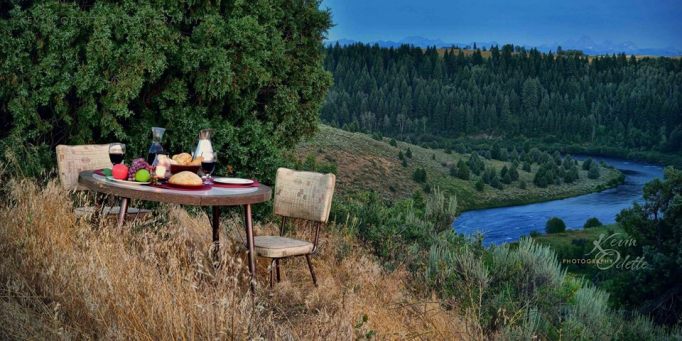
Instead of a throne overlooking peasants, Christ chose a table amongst friends to communicate the kind of relationship he seeks to have with his people. 


29512987_764974599284_1594586949612477621_n.jpg

Header & footer image used with permission from Kevin Odette Photography – Check out his other photos at kevinodettephotography.com


Did you miss Part 1? Click Here

Subscribe to read Part 3 Soon!


The Passionate Kingdom – Reflections for Holy Week (Part 1)

triumphal-entry-1.jpg

Palm Sunday just happened.

Churches throughout the world preached on Jesus riding into Jerusalem on a Donkey, and on the people laying down Palm branches and coats on his path as they honored him as a King.


In our church, the Pastor speaking mentioned that as Jesus was marching into the city from one direction, Pontius Pilate was marching into the city from another direction (Click Here for an Article on that).

I’d like to walk through that story here, and maybe reflect on what happened the day after Jesus walked into the city.


A Tale of Two Kings

The religious season was Passover.

Jewish people flocked to Jerusalem in droves to celebrate the release of Hebrew slaves from the land of Egypt through the power of God.

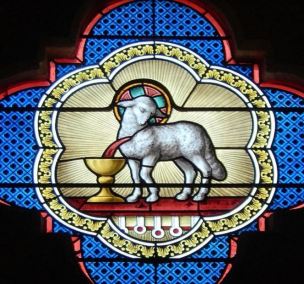
lambThey remembered the plagues that Moses called down from heaven.  They remembered the blood of a lamb that had to be put on doorposts in order to save them from the justice of God that was coming for the people in power who kept refusing to release the people of God.

And as they prepared themselves for these reflections, and in the midst of this Passover season, they saw something odd…


A man named Jesus was marching into the city of Jerusalem on a donkey.  Rumors of Jesus got around – he healed the sick, cast out demons, knew the Torah well, and opinions on who he was were varied – was he a prophet, lunatic, agent of evil…or could he be their Messiah?


Entry_into_Jerusalem_Icon_From_Afon_sm.jpg

Icon from Afon


Their attention focused in on the Donkey that he was riding – this was prophesied to be something that the Messiah would do!  And so, the Jewish crowds gathered in suspicious anticipation that this MAY be the King they had been praying for; the King who would free them from Oppression! They laid palm branches and their own cloaks before his feet as they thought…

“Maybe this is the Justice of God coming…Maybe we will be freed from our oppression…”


centurion.jpgOn the other end of the city, the most immediate source of that oppression marched in.  Swords, spears, helmets, and shields were glistening in the sun as this ruler made his grand entry in a show of force and power to meet the possible threats of crime and uprising as these rebellious Hebrew people flocked to Jerusalem to celebrate Passover.

This ruler was feared, and some of the Hebrew people were seeking to overthrow his power.  And yet, he marched into a city that was under his domain like a conquering war machine – demanding the people’s respect and allegiance.


The people gave Jesus the pomp and circumstance that Pilate desired.

The people chose to lay down their cloaks – their symbol of status, and protection from the elements – for a rebellious young teacher riding a farm animal.

The people wanted Jesus to overrule Pilate.

Their laying down of palm branches was an act of rebellion against the Empire of Rome!

So why did this crowd of people who shouted “Hosanna!” in an act of desire for deliverance…join the crowds of taunters to shout out “Crucify Him!” a few days later?


One King Knows Best

Jesus did not come to earth to overthrow earthly powers. He was not the great military leader that others expected him to be.  He did not satiate their blood-thirsty palates in carrying out God’s justice on Pontius Pilate and Rome itself.

He was a leader of a movement who did not resist arrest.

He turned the other cheek, and some viewed him as weak because of it.

He was a leader on a donkey with no army behind him.

They rejected Jesus because he wasn’t the King that they wanted.

Jesus was surely a Rebel, but he rebelled against Empire by demanding total allegiance to himself DESPITE earthly rulers; He didn’t need to overthrow an earthly ruler to demand complete allegiance, and have complete power.  And Mark’s Gospel makes it clear that he came to not only turn earthly powers on their heads but to bind the source of the powers of evil themselves – demons and Satan (Mark 3:22-27).


And so, Jesus really was the Messiah riding in on a Donkey – declaring that he was there to overthrow power…But his plans were longer lasting than what others expected.

dfb21d49ae1f2aae6ed9740e3eb9ceaa--early-christian-christian-art.jpg


Questions for Reflections:

  1. Would we consider Jesus to be a weak leader to face today’s problems?
  2. When there is an injustice, how do we normally expect justice to be carried out?
    • How is this similar and different from the ways of Jesus?
  3. Did my line about Jesus demanding COMPLETE allegiance rub you the wrong way?
    • What would this mean politically?  What would this mean personally?

Subscribe to read Part 2 soon!


Passionate Spirituality: A faith that keeps walking

I grew up in a Christian home, went to church every Sunday, attended Sunday school, youth group, and I accepted Christ at a very early age.  For years, it was Enough for me to simply be involved in the church, pray at meals, and wear “W.W.J.D” bracelets.

But over time, it wasn’t enough; it didn’t sustain me.

I started to realize that the faith that I had, though it was genuine, was based more on my upbringing and memorizing bible verses than it was based on my personal wrestling with the questions I had already been told the answers to.

In 11th grade, I started reading the bible for the first time on my own, and I started to pray more throughout my days.  I began to notice a thirst for knowing more about God that wasn’t there before, and I knew that I wanted to continually seek Him.

The story of life includes various seasons that bring both high hills of productivity, determination, and passionate interest, as well as low valleys of depression, doubt, and failure.

Oftentimes, we get so hung up on our imperfections that it stalls our progression of faith.  We think that God will puppet our lives according to how much we pray, how we “feel” about God at the moment, or how much we sin.  In thinking this way, we forget that God has called the imperfect to do his perfect Will since the days of Noah.   In thinking this way, we deny the full power of God’s Grace over our lives, and we assume that a God willing to die for the world won’t love us as much if we mess up just once.

Noah was a man God called to build the Ark, and once the flood waters subsided, Noah settled in with his family, grew a vineyard, and got drunk….Noah wasn’t perfect.  (Genesis 9:20-21 – NRSV)

Abraham was a man named Abram who did not seek God (as best we know) before God called him to be the start of the Nation of Israel.  Abraham did not Trust that God would give him a son through his own wife, so he slept with a servant….Abraham wasn’t perfect. (Genesis 16:1-2 – NRSV)

David was called to be the King of Israel, was described, by God, to be a man after God’s own heart. David committed adultery, and then sent the woman’s husband to the front lines of a battle…David Wasn’t perfect. (2 Samuel 11:2-15 – NRSV)

The Apostle Paul, before he was a believer, would hunt down followers of Jesus and persecute them.  After he became a believer and was called to be an Apostle, he still did something(s) that he did not wish to do…Paul wasn’t perfect. (1 Cor. 15:9, Romans 7:15-20  – NRSV)

So please, can we, myself included, move past the “I’m not good enough” mentality?  God sees us as Men and Women of God – we just have to follow Him.

Passionate Spirituality isn’t about doing all the right things all the time…its about having the desire to move forward, even when your life seems to be telling you to give up.   It is not about having faith that never doubts; but having a faith that seeks to grow from having those doubts.  Passionate Spirituality is a drive to know God more, love God more, love others more…all while going through our hills and valleys of bliss and despair.

So when we go to Church on Sundays, rejoice in knowing that God loves you, and you have the opportunity to join other believers to Worship and Know God more.

When you see your bible at home, do not see it as a scary book that is only for the “good” people, see it as God’s story of redemption.

When you pray at meals, in the morning, at night…Know that God loves you, and calls you to more than yourself – YOU are a part of His plan for the World.

Passionate Spirituality is a lifestyle centered around knowing God more.

If you want to grow more in your faith, but you do not know where to start – email lambtheology@gmail.com and I will see if I can help.  Or comment below!

——————————————————————-

Discussion Questions:

Why do we go to Church?

What do you do in order to grow closer to God?

What book, chapter, or verse in the bible has been the most meaningful in your life? Why?
A devotional on insecurity hindering potential

On their album, “Continued Silence”, Imagine Dragons produced a song called “Demons”, and the lyrics of the chorus are shown below:

 “When you feel my heat
Look into my eyes
It’s where my demons hide
Don’t get too close
It’s dark inside
It’s where my demons hide
It’s where my demons hide” – Imagine Dragons – “Demons”

In the song, the band conveys an honest aspect of humanity: Imperfection.  The “Demons” mentioned in the song are insecurities and past mistakes that make a person vulnerable.   We try to hide the dark parts of ourselves from others, and in some instances this self-censorship becomes a hindrance to our progression as friends, spouses, and even as Christians.  We think we are not “good enough”, so we hold ourselves back.  We think people won’t like us, so we remain silent.

In another song by Jon Foreman called “Equally Skilled”, Foreman laments over his own and humanity’s imperfections, but he ties it up with some ending lines that tell of God’s perfection:

“Both of His hands are equally skilled
At showing me mercy, equally skilled
At loving the loveless, equally skilled
Administering justice, both of His hands, both of His hands” – Jon Foreman – “Equally Skilled”

These two songs communicate humanity’s imperfections, but Foreman’s lyrics give us a hope that at least God has got it right.  Which brings me to the following point:

Humans can be good, or bad.  We can have insecurities and imperfections, BUT in being made in the image of God…we have GREAT potential.  Our “Demons” can hold us back, while God, accepting who we are – including our imperfections, calls us to move forward and to be His Hands on earth.

The early church wasn’t perfect.  The early church was composed of a bunch of new people who needed a lot of direction and correction to keep moving forward together, and to advance the faith.

In Acts 4:22-37, a passage which I wrote about HERE, the early church is spoken of as sharing their possessions so that there was “no needy person among them”.

They weren’t perfect.  They likely worked hard for their money, and were hesitant to share.  But they got past their “demons” of pride and selfishness, and became self-less in order to be God’s caring hands to those around them.

What can YOU do to help your fellow person?